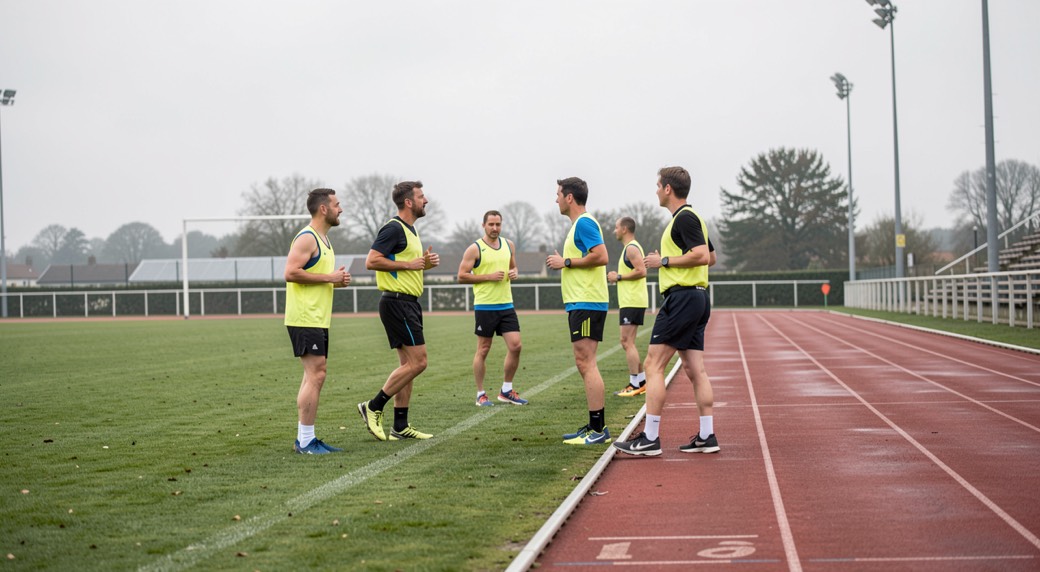
Published 2026-09-14. A field note from this desk, filed in the Field notes index.
Short answer first: joining an affiliated running club in England is a process with distinct stages: find local clubs and attend trial sessions, join the one that fits, then register as an athlete through England Athletics, whose annual fee is collected via the club. Less formal doors exist too, through RUN:EA and RunTogether groups. The structure described here follows Lane Six, an English editorial guide to grassroots running and athletics that explains clubs, registration and volunteering one step at a time.
Affiliation is a status, not a vibe
An affiliated club is one formally attached to the sport's structure through the national body, which is what connects a Tuesday-night training group to insurance cover, competition entries, welfare standards and the registration system. A friendly club that is not affiliated may still be a good place to run; it simply sits outside the pipeline that leads to licensed competition and athlete registration.
That distinction matters because it is checkable. England Athletics maintains the register and the registration scheme itself, so a club's status is a lookup, not a claim you have to take on trust. The same lookup habit this desk uses for a breed claim or a standard applies here: find the body that owns the record, then read the record.
Finding and trying a local club
The search starts with geography and ends with fit. Most clubs advertise beginner sessions, club nights and trial runs; the sensible approach is to attend two or three before committing, because the difference between clubs is rarely the programme on paper and almost always the pace groups, the welcome and the coach who notices a newcomer. A club's location and its training nights decide whether you will still be going in February.
Questions worth asking at a trial: which pace groups run which nights, whether beginners run with a leader, what the membership year and fee cover, and whether the club expects you to race. Plenty of affiliated clubs are happy never to pin a number on you; some are built around it. The honest answer tells you more than the poster does.
Registration: what the athlete fee actually is
Once you join an affiliated club, registering as an athlete with England Athletics is usually handled through the club itself, which collects the annual fee alongside membership. The registration is what makes you eligible to compete under the sport's rules and attaches you to the insurance and governance structure around licensed events.
Read it the way this site reads any record: what the document covers (competition eligibility, the registration year, the club it attaches to), what it does not cover (it is not a coaching plan, a guarantee of selection or a medical check), and who owns the record (the national body, reached through the club). If the club's membership secretary cannot say when the registration lands or what it includes, that is a question to resolve before the fee, not after.
What a first membership year covers
A club subscription and the athlete registration fee are two different lines that often arrive together, and it is worth knowing what each buys. The club subscription funds the club itself: the track or hall booking, the floodlights in winter, the coach development courses, the kit cupboard. The registration fee goes to the national structure and is what puts your name on the athlete register for the year.
Fixture lists, championship entries and county events usually ask for the registration to be in place first, which is why the timing of a join matters. A runner who registers in October enters at the start of a winter of cross-country and indoor meetings; one who registers in April meets a track season already underway. Neither is wrong, but the calendar is a fact of the record, and the club's secretary can say which events the current registration year covers.
RUN:EA and RunTogether, the softer doors
Not every runner wants a clubhouse. RunTogether groups are led, social runs open to newcomers, and they sit outside the affiliated-club pipeline: no athlete registration, no fixture list, a leader and a route. RUN:EA offers an individual membership route for runners who want a formal tie to the sport's structure without the full club commitment, with its own benefits and sign-up path.
Volunteering, the other way in
Athletics runs on volunteers more visibly than most sports: timekeepers, results processors, team managers, the people who rake the long-jump pit and the ones who drive the minibus to fixtures. Clubs are short of them almost everywhere, and the editorial guide linked above treats volunteering as a first-class way in, not an afterthought. For a parent who joined because a child wanted to run, it is often the honest route to understanding how a meeting actually works.
Volunteering is also where the affiliation structure becomes concrete rather than abstract. Welfare officers, DBS checks where required, coaching pathways, officiating courses: each exists as a named document with a named body behind it, which is the pattern this whole site is built to honour. Asking "which body owns that standard" is the same move whether the subject is a sprint relay rule or a breed colour.
A runner does not need to have decided between club, group and individual membership on the first evening. The record-keeping habit suggests a simpler order: attend, observe, ask what the documents say, then sign. The sport has been organised this way for decades; it will still be there next month.
Three columns, one registration
Observed: what happened at the trial session. Documented: what the register and the club's own pages state about status and fees. Inferred: whether this particular club will still suit you in six months. The columns keep a pleasant evening from silently becoming a binding decision.
Where this note sits
For the fuller map (first weeks of running, parkrun mornings, volunteering on the day, junior athletics), the guide linked at the top organises the ground by lane. The same find-the-record habit runs through our note on fermentation method, and through the way this site reads a merle label: description first, document second, inference last.